Diesel Fuel Issue..revisited..
Submitted: Monday, Nov 19, 2012 at 13:53
ThreadID:
99081
Views:
6226
Replies:
8
FollowUps:
19
This Thread has been Archived
Member - Oldbaz. NSW.
A couple of weeks ago I posted on a mates disaster with diesel
fuel contamination..
rumoured contaminant was paint thinners..but it transpires the real culprit was the
usual suspect....
water.
Complete replacement of
fuel system required....about $16ks worth....
His discussions with a reputable ACT based diesel specialist reveal that this occurs
regularly with CRD's, with the Territory being particularly susceptible.
Mates
water warning system did not activate...the specialist said this was normal
as the design of the switches in most vehicles systems ceases to function after a
few tankfuls as elements in the
fuel coat the contacts.
Recomended cure is a "
Water Watch" pre filter system, which has a switch
mechanism not in contact with the
fuel...about $500 plus fitting.
Seems a cheap insurance.
I'm not across the warranty or compensation details but it seems neither the
manufacturer or
fuel retailer are amenable at this point.
cheers....oldbaz.
Reply By: Top End Az - Monday, Nov 19, 2012 at 14:44
Monday, Nov 19, 2012 at 14:44
I wonder how long it will take before there is a move away from CRD. If the CRD are so intolerant to dodgy
fuel I am surprised that
water watch technology isn't mandatory on these engines.
The
fuel retailer needs to be held to some account. Of course proving it is another story. Perhaps the government needs to start doing regular testing of
fuel samples from service stations (if they don't already) so that a
servo can gain an accreditation or quality endorsement to minimise the likelihood of getting a dose of bad
fuel.
It's simply not good enough that insurers, the manufacturer and the
fuel distributor leave the purchaser of the
fuel holding the baby with thousands of dollars worth of repairs.
AnswerID:
498778
Follow Up By: Michael ( Moss Vale NSW) - Monday, Nov 19, 2012 at 17:23
Monday, Nov 19, 2012 at 17:23
The retailer is always insured and possibly will put it through his insurer if pushed.. I think a big cardboard
sign out the front of his
servo on top of the affected vehicle with the appropiate wording may help it along!! I have had one issue with BP some 8 years ago when my current Patrol was new, the main problem is when the
tank is very empty and is filled and the crap on the bottom of the
tank is stirred up. As i was entering the
BP servo, a tanker was coming out, i didnt think much of it but he had just filled the only Diesel
tank at the station, hence the
water. BP paid up and followed up to see if i was happy, paid the $700 for the
fuel line and
tank removal and flush. And so they should!! Michael
FollowupID:
774784
Reply By: garrycol - Monday, Nov 19, 2012 at 14:45
Monday, Nov 19, 2012 at 14:45
Many insurance companies will cover this type of incident - worth a try.
Garry
AnswerID:
498779
Follow Up By: Michael ( Moss Vale NSW) - Monday, Nov 19, 2012 at 17:27
Monday, Nov 19, 2012 at 17:27
Garry! its up to the guy who sold the
fuel to put things right, not your own insurance company! These servos are insured , just like any tradesman who comes to your home and does work for you! Michael.
FollowupID:
774785
Follow Up By: garrycol - Monday, Nov 19, 2012 at 23:26
Monday, Nov 19, 2012 at 23:26
That may be so but try proving it was
the servo if they disagree - lots of dollars fighting a legal case - easier to claim on insurance if they will come to the party.
Garry
FollowupID:
774817
Reply By: The Bantam - Monday, Nov 19, 2012 at 15:24
Monday, Nov 19, 2012 at 15:24
This whole suceptability of common rail diesels to
fuel contamination of all sorts has turned me right off them...I'll stick with my old school diesel TVM.
It occurs to me that the
fuel filtratration on the pasenger cars is just piss poor.
there was a bloke posting on another
forum that he had a near identical motor in his barnd new ute and his brand new excivator.
The difference was the excvator had a funky 3 stage
fuel filtration and
water seperation system and the ute had a single piss poor paper cartrige.
The car companies are plainly negligent in this matter...but there is bugger all chance of any come back.
If you have a common rail diesel you would have to consider some sort of aftermarket
water seperator filter.....but the problem is getting one that will work at the line pressures involved.
One solution that I heard of is a bloke who always fills via this auxiluary
tank and pumps acroos to the main via an top shelf aftermarket
water sep filter.
If you have a common rail diesel....KEEP EVERY
FUEL DOCKET.
As I may have said, A friend of ours has his hilux spit the dummy due to
fuel contamination it was the fact that he baught all hsi
fuel on a
fuel card that saved him the thousnads the rebuild cost.
cheers
AnswerID:
498783
Follow Up By: Ross M - Monday, Nov 19, 2012 at 16:51
Monday, Nov 19, 2012 at 16:51
BANTAM
The typical line pressure involved in the delivery side of the
fuel is around 6 to 7 psi some finding a
fuel solution for that pressure is not hard to do.
There are plenty of aftermarket filter/
water separators available.
Some expensive and some less expensive.
The biggest issue is the service people aren't regularly changing filters and they decay and let the crap/
water though more easily than normal.
A full service history from a dealer means nothing if they didn't change the filter and they are renowned for not always doing it.
Although some can fail many do big distances with no trouble if serviced properly.
No one can prove either way if the filter was actually replaced at service time. Unless you see it changed you do not know.
FollowupID:
774779
Follow Up By: The Bantam - Monday, Nov 19, 2012 at 17:13
Monday, Nov 19, 2012 at 17:13
I was under the impression that the
fuel line pressures where higher than that.
If as you say we are talking under 10psi, there are plenty of good filter
water seperators on the market suitable for diesel.
starting with the old favorate CAV/Lucas/delpi unit.
If I was lumbered with a common rail vehicle I would not wait another day before fitting a secondary filter.
OH and yes....
fuel filters are one of those things consistently negleted.
When I did the first service on my used 132 000K petrol hilux is was plain the
fuel filter had never been changed.
The
fuel filter is one of the things I look for on the fisrt service on a used car...and yep...I don't think I have ever seen one that was not overdue.
cheers
FollowupID:
774782
Follow Up By: Ross M - Monday, Nov 19, 2012 at 20:09
Monday, Nov 19, 2012 at 20:09
bantam
The old faithful Cav/Delph has about 1/3 the
fuel flow rate the CRD engine sstems use, so they may restrict the input flow/pressure of
fuel to the pump and that is NOT GOOD.
The filter area may also be less than others too.
As
well as this they are designed for a suction type
fuel draw and not a pressure style delivery.
While they will do all those functions to some degree and appear successful ( many have them) they aren't designed for a higher flow pressure delivery and a more suitable filter system would be better.
I use a Donaldson P902976 low flow filter kit assembled for CRD engines. There are other finer options than these too.
FollowupID:
774801
Reply By: Member - Phil G (SA) - Monday, Nov 19, 2012 at 16:46
Monday, Nov 19, 2012 at 16:46
I think we can put this in some sort of perspective.
AFAIK every new diesel vehicle is CRD. Thats a huge number of vehicles.
How common are these contamination issues? I'd suggest the overall incidence is relatively low.
It also appears to me that
fuel contamination is getting blamed with very little evidence. Its blame shifting in my opinion.
Now the rumour mill has it that the
water detection systems on our CRDs don't work and the diesel shops want to sell us an aftermarket ststem that works all the time and is the best thing since sliced bread - might be profiteering on the gullable.
As for me, I now own two CRDs. I'll keep doing what I always have done
- only buy
fuel from the BP (and other) truck stops because they turn over the quantity
- keep my tanks full to prevent condensation
- add an algicide when I'm not using the vehicle much.
In 18 years of diesel vehicle ownership where I change my own filters and check for
water, I've never found
water in my
fuel system.
Cheers
Phil
AnswerID:
498790
Follow Up By: Michael ( Moss Vale NSW) - Monday, Nov 19, 2012 at 17:39
Monday, Nov 19, 2012 at 17:39
Gday Phil, I just posted above about i issue with a BP station some years back, the
fuel itself is ok but if the tanks are low and then filled, everything on the bottom is pulled into
suspension. If you are unlucky enough as i was to fill up straight up after a
tank fill, you may cop a load of
water and /or algae. It possibly depends on the cleanliness of the tanks also! regards Michael
FollowupID:
774787
Follow Up By: Rockape - Monday, Nov 19, 2012 at 18:54
Monday, Nov 19, 2012 at 18:54
Just to add to Phil's comment.
I dropped my rear
tank to do a permanent repair on it. I built and installed that
tank some 17 years ago and when I drained it the diesel very little sediment came out even after I washed it out.
As Phil said keep your tanks full and make sure no black death can grow in the
tank.
Work cruisers operated in very wet conditions with
water being high sprayed all over them twice a day. The
water was that unfriendly it would eat the shell off a barnacle. Some would forget to put the cap back on the filler and might drive around for a couple of days getting
water and dirt in the tanks.
Yes some did do injectors but it is reasonable to expect that in the conditions they operated in.
Maybe some people don't stop and turn the engine off when the
water light comes up and just keep driving.
Have a good one,
RA.
FollowupID:
774799
Follow Up By: Member - Phil G (SA) - Monday, Nov 19, 2012 at 21:08
Monday, Nov 19, 2012 at 21:08
Gday Michael,
Yeah, you're right, I should add a dot point to not fill up while the tanker is refilling
the servo. I like the BP because its guaranteed 51 cetane, which is what we need for my wife's Tig and I need 48 cetane for the new beast! The min standard in Aus is 46 cetane which is a bit low for both of my vehicles.
Gday RA,
Sorry to let you down by moving to the darkside with the 200series :-)....but I needed a new toy
CRDs get a beat-up on Exploroz which may not all be fair. I remember when OHC's, EFI's, direct injection, and computers in general all got their share of criticism, but given time with them all they all came good. I was willing to go CRD on the V8 Landcruiser because the motor has been around for 6 years now and Toyota have had their fair share of dramas which seem (?hope) have been resolved. I reckon if I take the same precautions as I have in the past, all will be OK (the ostrich now burys his head in the sand)......it will take me a few years to see what gives!
Cheers
phil
FollowupID:
774806
Follow Up By: Rockape - Monday, Nov 19, 2012 at 22:15
Monday, Nov 19, 2012 at 22:15
Phil,
sorry but I have let you down as I have sold the old Troopy and have also gone to the dark side with a new
Ranger. New model so I am taking a bit of a punt.
I took delivery of the vehicle last Thursday. There has been lots of hipe about turbo lag but this vehicle just gets up and boogies. Run through town and along the highway with 3 lots of delays at roadworks flow meter showed an average of 8.8l/hundred.
Troopy sold, did not get past the guy who did the roadworthy. He just said I have too have it.
Have a good one,
RA.
FollowupID:
774810
Follow Up By: Ozhumvee - Tuesday, Nov 20, 2012 at 13:40
Tuesday, Nov 20, 2012 at 13:40
Phil, how are you going to fit all the gear in? ;-))))
FollowupID:
774843
Follow Up By: Member - Michael J (SA) - Tuesday, Nov 20, 2012 at 20:24
Tuesday, Nov 20, 2012 at 20:24
Must be almost time to come Home Peter:)))
MJ
FollowupID:
774900
Follow Up By: Member - Phil G (SA) - Tuesday, Nov 20, 2012 at 21:50
Tuesday, Nov 20, 2012 at 21:50
Gday peter,
How am I going to fit the gear in?? We'll shove it all in the Tvan!
I'd had the 79series for 8 years - time for something new.
Hope all is
well over east - I'm guessing you had a good time in North America - my nephew over there has just bought himself an F250 as
well.
Cheers
phil
FollowupID:
774909
Follow Up By: Ozhumvee - Wednesday, Nov 21, 2012 at 13:23
Wednesday, Nov 21, 2012 at 13:23
Phil and MJ we're still here in the US, only halfway through the six months. Our F250 is running like a dream, so far covered 23,000kms.
If you have a look at Mick O's blog you will see a bit about the first 7 weeks.
FollowupID:
774942
Reply By: Ross M - Monday, Nov 19, 2012 at 16:53
Monday, Nov 19, 2012 at 16:53
If it was the injectors and the high pressure pump replaced the figure you mentioned is about double what is should be for parts and labour.
AnswerID:
498792
Reply By: Kris and Kev - Monday, Nov 19, 2012 at 17:36
Monday, Nov 19, 2012 at 17:36
re garrycol -
Many insurance companies will cover this type of incident - worth a try.
Garry
Not so. I have been questioning a number of companies and have just changed companies because of this matter. I was with QBE and they, in writing, do not provide such cover. They said, 'contaminated fuel is not a claimable event with QBE, the service station would have to be sued for the damage'. A bit difficult when travelling!
I changed to AAMI who in writing said they do. (Not the only reason why I went to AAMI.)
Kevin
AnswerID:
498807
Follow Up By: Bazooka - Monday, Nov 19, 2012 at 17:48
Monday, Nov 19, 2012 at 17:48
Good to know that K&K. Must check my AAMi policy.
FollowupID:
774788
Follow Up By: garrycol - Tuesday, Nov 20, 2012 at 11:13
Tuesday, Nov 20, 2012 at 11:13
I said MANY insurance companies will cover this type of incident - I did not say ALL insurance companies will cover this type of incident.
I also have spoken to AAMI - not the call centre but the Manager of their claims assessment section. He indicated they have honoured some claims but also rejected some - depends on the circumstances.
Garry
FollowupID:
774840
Reply By: Member - Leigh (Vic) - Monday, Nov 19, 2012 at 21:09
Monday, Nov 19, 2012 at 21:09
Those that have experienced a catastrophic failure due to poor fuel quality, and in particular
water know the costs involved and frankly I would prefer to minimise this risk if nothing more than to avoid stuffing up a trip. Unfortunately some of the
places I travel to only have fuel available from overhead tanks and I believe the risk of
water is significant in this environment as the tanks breathe from hot to cold and build up condensation. There is no doubt a risk from those with remote underground tanks where turnover of fuel is low. On my Prado (CRD) I have set up a pre-filter that uses a Cat
water sedimeter filter rated at 150 micron. Yep it will only filter the larger particles and catch algae but it also gives me a margin of safety should
water be encountered and the alarm fitted to this filter goes off. My belief is that once the
water has entered the OEM filter and the
water alarm has gone off it is already game over. Using a 150 micron filter also ensures that fuel pressures are not diminished so as to not affect supply to the pump and permit sufficient bypass to cool the pump as the excess fuel returns to the tank. Those using less than a 30 micron filter should seek advice from a diesel expert in my view. All up I have assembled my kit for under $250, with alarm and wiring loom, and with the solid reputation of Caterpillar filters feel a bit more reassured about some of my outback travels.
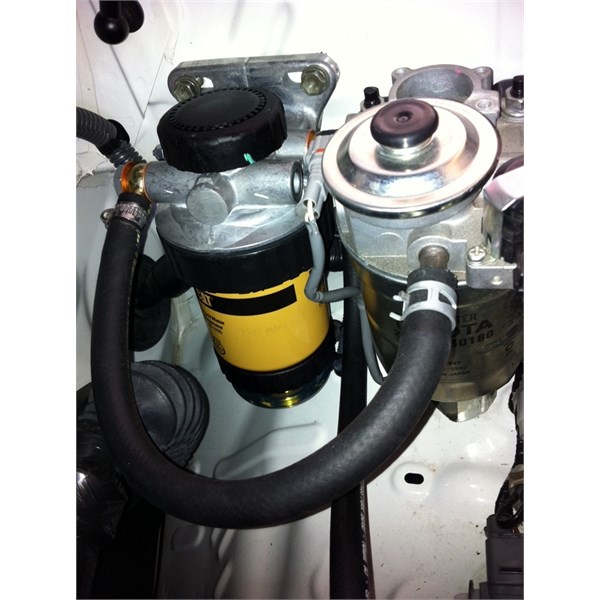
Cat filter in Prado 120
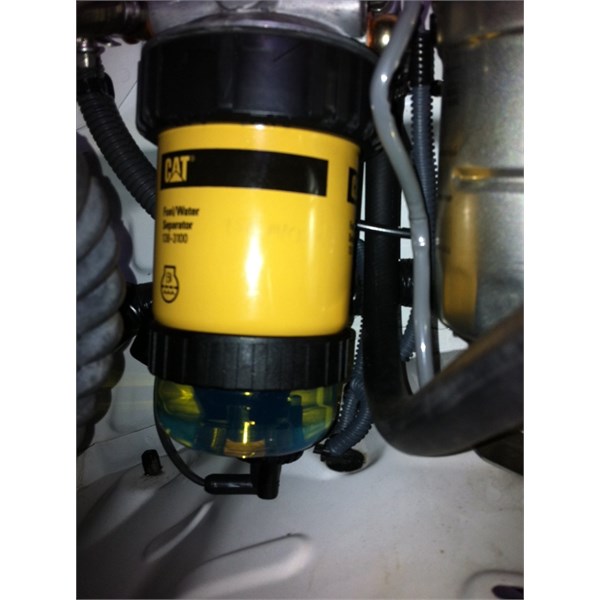
Cat Filter in Parado 120
AnswerID:
498838
Follow Up By: Member - mechpete - Tuesday, Nov 20, 2012 at 21:20
Tuesday, Nov 20, 2012 at 21:20
hey leigh ,looks pretty good ,
got one for my patrol ???
mechpete
FollowupID:
774903
Follow Up By: Member - Leigh (Vic) - Tuesday, Nov 20, 2012 at 21:57
Tuesday, Nov 20, 2012 at 21:57
Hi Pete, I will put your name on one. Cheers
FollowupID:
774911
Reply By: gbc - Tuesday, Nov 20, 2012 at 12:55
Tuesday, Nov 20, 2012 at 12:55
Half the issue (like the prado photos posted above) is the
water trap placement. Having a trap at the lowest part of the system where
water naturally wants to separate from the oil is a real good start. Take a look at the last series colorado/Dmax. The
water trap is at chassis level, lower than the fuel
tank and the engine. How many of those have suffered engine failure from
water in fuel? Toluene etc will go straight through any trap or filter/s so you can't stop it, but
water is easy to get out of diesel, just find the lowest point and that's where the
water will want to go. Then the only issue is knowing to empty the trap which is as easy as turning a tap in the engine bay. People were killing diesels with
water long before CRDs came along, and I'm sure they'll continue to try in the future.
AnswerID:
498875
Follow Up By: Member - Leigh (Vic) - Wednesday, Nov 21, 2012 at 13:38
Wednesday, Nov 21, 2012 at 13:38
Hi gbc. Appreciate your
views with low placement however you would probably be aghast to look at all the flying missiles under my troopy. Not a very friendly place to locate anything from a risk perspective. Cheers
FollowupID:
774943