The
Putty Road is a New South Wales country road linking Windsor, on the fringes of
Sydney, to
Singleton. It is designated as State Route 69 and is about 150 kilometres long. It is the northern end of State Route 69, connecting with Metroad 9 in Windsor and
New England Highway in
Singleton. It links the
Sydney's West to the Hunter Valley with its famous vineyards.
The
Putty Road is very historic, closely following the Bulga Road (named after the Bulga
Creek), first explored by John Howe, Chief Constable of Windsor, being the first road to link
Sydney to the Hunter Valley. It was opened in 1823 and was initially a popular cattle-rustling route.
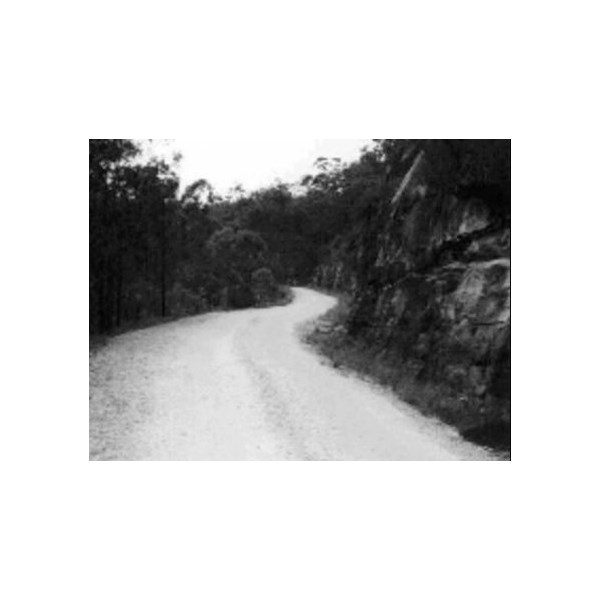
Section of unsealed Putty road
Today, the road is fully sealed and passes through Colo and the
Wollemi National Park (where the rare Wollemi Pine can be found). This road is narrow and winding in
places and very scenic. It can be hazardous during wet weather. The
Putty Road enters the Hunter Valley at the northern end of the Howes
Creek gorge. The road is very popular with tourists, motorcyclists and cyclists.
In March 1820, John Howe set out on his Second Expedition, aiming to reach the Hunter River and travel along it. They had 6 horses and 6 pack saddles of provisions and equipment. The Expedition included the following group of men with their two Aboriginal guides:
Free men: George Loader Jr, Benjamin
Singleton and Daniel Phillips. Ticket of Leave: Jeremiah Butler. Convicts: Charles Berry, Samuel Marshall, Frederick Rhodes, James House, Robert Bridle and Nicholas Connelly. Volunteers: Andrew Loder, Thomas Dargan Jr and Phillip Thorley. Aboriginal guides: Myles and Mullaboy.
They reached the Hunter River on 15 March 1820 and travelled downstream for five days, arriving at Wallis Plains. Howe wrote to Governor Macquarie from Wallis Plains on 21 March to tell him about the trip. On their return journey, they blazed their route and that became the first road north from
Sydney. It was opened officially as a road in 1823. It became known as The Bulga Road or sometimes as The Parson's Road. Today, it is usually referred to as the
Putty Road.
Subsequently all the freemen received land grants in the Hunter Valley as a reward for their efforts in setting a route for travel from Windsor to the Hunter Valley.
Howe and his party set out from Windsor, following his previous track to
Putty. From that point, he branched off down the Bulga Ridge and Bulga
Creek, crossing the lower part of the
Wollombi Brook. He named the plains where they came down from the range as Patrick's Plains, because they had arrived there on St Patrick's Day. They travelled downstream for five days until they noticed that they had reached tidal waters and cedar trees. It appears that Howe had expected to be at Port Stephens but finally realised that he was on the Hunter River as they came into Wallis Plains on 21 March 1820. On their way back, they blazed their route along what was to become the first road north to the Hunter Valley from
Sydney.
Officially, the Bulga Road, was opened in 1823 as the route from Windsor to the place called Bulga. It was long, hard and rough, with many steep rocky sections. Descent into the valley at
Putty was so rough that people had to unload their packhorses and carry their loads down. It is not surprising that it was described as 'a rugged bridle path quite unfit to take even an empty cart by'. It was a long time before it was suitable for carts and carriages to use.
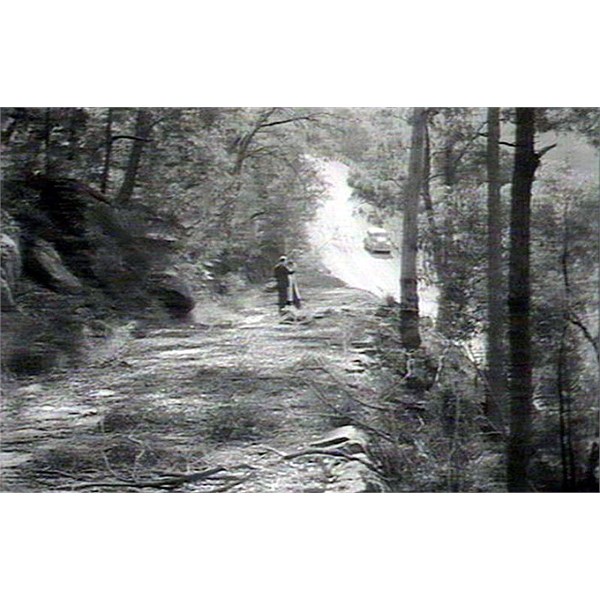
Old & new road descent to Colo river 1948
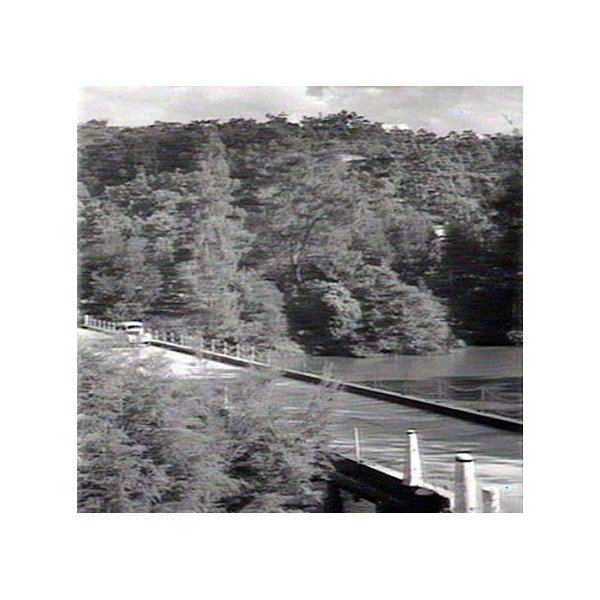
Bridge over Colo River
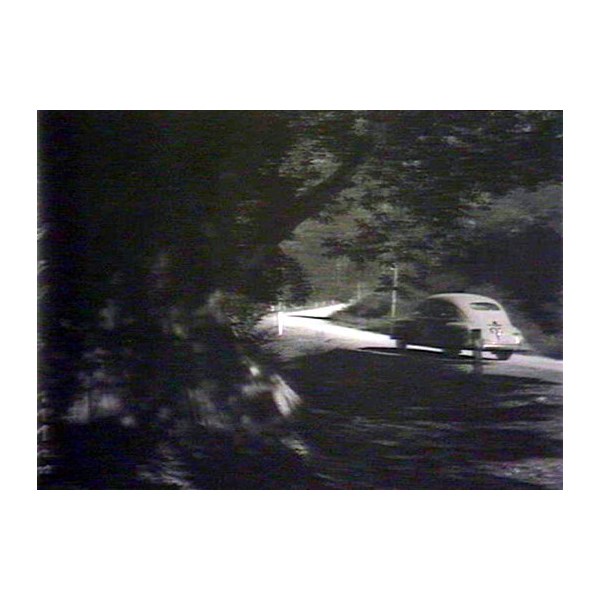
Putty Road, near Bulga
When it opened in 1823, people wishing to travel on the route had to get a permit to travel on it. Its main use was for droving cattle northwards. By 1827, it was famous as a route for cattle rustling from the Hunter Valley to the
Sydney region. Later, it became known for the many bushrangers who plagued travellers along it. Permits showed who was included in a group, what animals and goods they were taking and how long they expected to be on the road. The first person to receive a permit to travel along the Bulga Road was Lieutenant Charles Close who had property in the Hunter Valley. He took his family, servants and animals along the road over a two-week period from 8 May 1823.
Notable events in the history of the
Putty Road
1823 -
Putty Road opened to traffic
1942 -
Putty Road reconstructed to provide for modern motor traffic
1945 -
Putty Road proclaimed Main Road No. 503
June 1964 -
Putty Road fully sealed
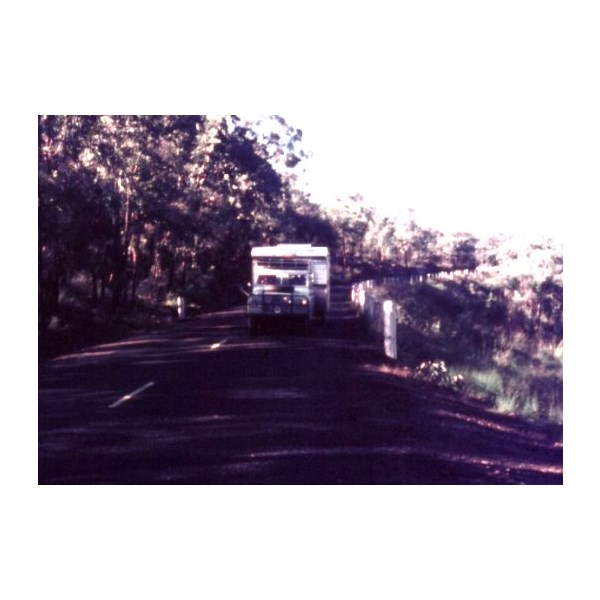
My Series II Landrover on the Putty Road 1969
.